Configurate Your Sytems
Every aquaponics system relies on three core components: the Aquaculture-Part, the Hydroculture-Part, and the Enclosure. Below, you can explore, evaluate, and combine each module individually to match your regional climate and target facility design.
Aquaculture Part Hydroculture Part Enclosure
Download the Free Project Guide
Aquaculture Part
The choice of system type depends on the required production capacity, available floor space, whether pit excavation is feasible, your manual skills and your budget.
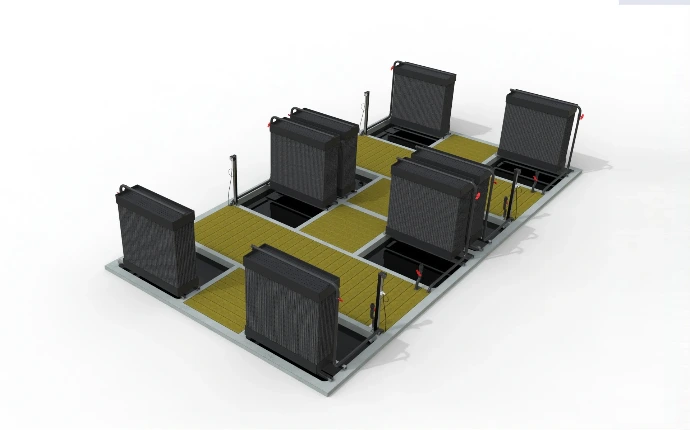
CONCRETE - HIGH PRODUCTION
In this configuration, the aquaculture tanks are cast on-site in concrete, allowing them to be extremely space saving and perfectly tailored to local conditions.
Production Capacity
These production volumes are possible in a CONCRETE system with 2 water circuits.
Fish species | Annual production |
|---|---|
African Catfish | 25 tons |
Tilapia | 6,3 tons |
Required floor space
The required floor space per water circuit depends on its production capacity and fish species.
The typical size for 1 cricuit is 7,4x5m | 24'4"x16'5"
Additional facilities that require space and should preferably, but not mandatorily, be located near the fish area include the feed storage (a storage capacity of at least four months is recommended), purging area, mechanical room and also the processing room.
Example - CONCRETE system with 2 circuits:
Area | Size |
|---|---|
Fish system | 74m² | 796,2 sq ft |
Feed storage | 10m² | 107,6 sq ft |
Purging zone | 12m² | 129,1 sq ft |
Mechanical room | 8m² | 86,1 sq ft |
Total aquaculture | 104m² | 1119 sq ft |
Processing room | 30m² | 322,8 sq ft |
Total production | 134m² | 1442 sq ft |
System data:
Below figures are based on a CONCRETE system with 2 circuits:
Tank volumes
Tank | Volume |
|---|---|
Growout (8 pcs) | 22m³ | 5812 gal |
Juvenile (8 pcs) | 7,2m³ | 1902 gal |
Total fish & filter tanks | 51,4m³ | 13578 gal |
In-/Output
For African Catfish | QTY per week |
|---|---|
Fish feed | 435kg | 960 lbs |
Freshwater | 12,8m³ | 3381 gal |
Electricity (excl. heating) | 492 kWh |
Sludge water | 10,8m³ | 2853 gal |
For Tilapia | QTY per week |
|---|---|
Fish feed | 165kg | 363 lbs |
Freshwater | 9,7m³ | 2562 gal |
Electricity (excl. heating) | 492 kWh |
Sludge water | 7,6m³ | 2007 gal |
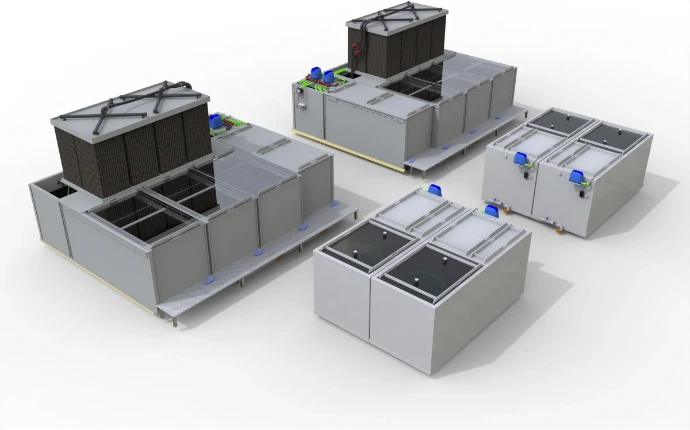
MODULE - MEDIUM PRODUCTION
With this setup, fish are kept in prefabricated , insulated tanks and filters which are designed for quick, hassle-free on-site assembly. Only minor excavation works are needed.
Production Capacity
These production volumes are possible in a MODULE system with 2 AP-4850 and 4 AP-910 modules.
Fish species | Annual production |
|---|---|
African Catfish | 11 tons |
Tilapia | 2,8 tons |
Required floor space
Size of one AP-4850 module: 4x3,5m | 13'2"x11'6"
Size of one AP-910 module: 2,4x1m | 7'10"x3'4"
Access aisles are required for the modules.
Additional facilities that require space and should preferably, but not mandatorily, be located near the fish area include the feed storage (a storage capacity of at least four months is recommended), purging area, mechanical room and also the processing room.
Example - MODULE system 2 AP-4850 + 4 AP-910
Area | Size |
|---|---|
Fish system | 74m² | 796,2 sq ft |
Feed storage | 10m² | 107,6 sq ft |
Purging zone | 12m² | 129,1 sq ft |
Mechanical room | 8m² | 86,1 sq ft |
Total aquaculture | 104m² | 1119 sq ft |
Processing room | 30m² | 322,8 sq ft |
Total production | 134m² | 1442 sq ft |
System data:
Below figures are based on a MODULE system with 2 AP-4850 and 4 AP-910 modules:
Tank volumes
Tank | Volume |
|---|---|
Growout (6 pcs) | 9,7m³ | 2562 gal |
Juvenile (4 pcs) | 3,6m³ | 951 gal |
Total fish & filter tanks | 26,5m³ | 7001 gal |
In-/Output
For African Catfish | QTY per week |
|---|---|
Fish feed | 191kg | 421 lbs |
Freshwater | 7,7m³ | 2034 gal |
Electricity (excl. heating) | 151 kWh |
Sludge water | 5,6m³ | 1479 gal |
For Tilapia | QTY per week |
|---|---|
Fish feed | 73kg | 161 lbs |
Freshwater | 7,7m³ | 2034 gal |
Electricity (excl. heating) | 151 kWh |
Sludge water | 5,6m³ | 1479 gal |
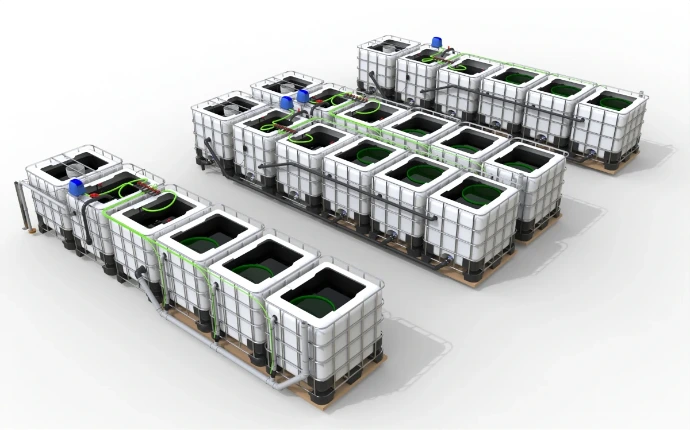
IBC - LOW PRODUCTION
In this system type, the aquaculture tanks consist of IBC containers and is ideal for anyone looking to enter commercial aquaponics with a small production volume.
Production Capacity
These production volumes are possible in a IBC system with 4 circuits.
Fish species | Annual production |
|---|---|
African Catfish | 9,8 tons |
Tilapia | 2,7 tons |
Required floor space
Size of an circuit consisting of 6 IBC containers
6,5x1,5m | 14'10"x4'11"
Access aisles are required for the circuits.
Additional facilities that require space and should preferably, but not mandatorily, be located near the fish area include the feed storage (a storage capacity of at least four months is recommended), purging area, mechanical room and also the processing room.
Example - IBC system wit 4 circuits
Area | Size |
|---|---|
Fish system | 74m² | 796,2 sq ft |
Feed storage | 10m² | 107,6 sq ft |
Purging zone | 12m² | 129,1 sq ft |
Mechanical room | 8m² | 86,1 sq ft |
Total aquaculture | 104m² | 1119 sq ft |
Processing room | 30m² | 322,8 sq ft |
Total production | 134m² | 1442 sq ft |
System data:
Below figures are based on a IBC system with 4 circuits:
Tank volumes
Tank | Volume |
|---|---|
Growout (12 pcs) | 11,5m³ | 3038 gal |
Juvenile (0 pcs) | net in growout tank |
Total fish & filter tanks | 22,5m³ | 5944 gal |
In-/Output
For African Catfish | QTY per week |
|---|---|
Fish feed | 171kg | 377lbs |
Freshwater | 6,9m³ | 1823 gal |
Electricity (excl. heating) | 143 kWh |
Sludge water | 4,8m³ | 1268 gal |
For Tilapia | QTY per week |
|---|---|
Fish feed | 71kg | 156 lbs |
Freshwater | 6,8m³ | 1823 gal |
Electricity (excl. heating) | 143 kWh |
Sludge water | 4,8m³ | 1268 gal |
Hydroculture Part
The choice of the bed type depends on the required production capacity, available floor space and the plants you want to grow. All this types can be build in different shapes and sizes to best fit in your greenhouse.
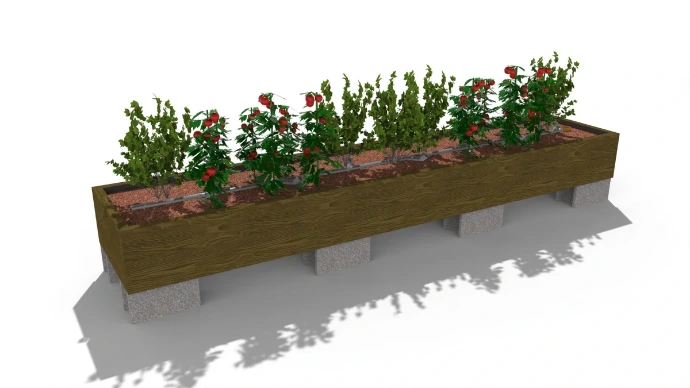
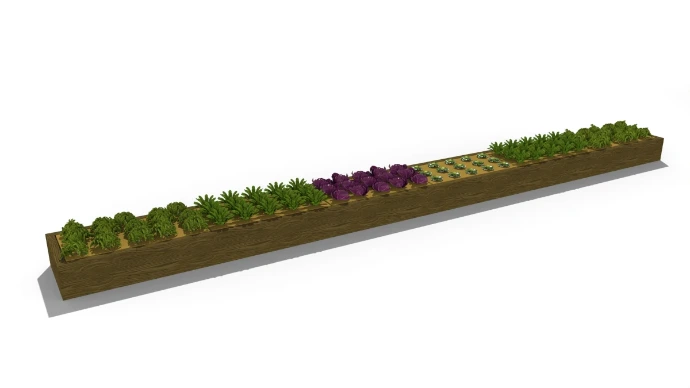
MEDIABED
Best suited for:
- Heavy-feeding & large fruiting plants: Tomatoes, peppers, cucumbers, squash, and eggplants that need strong root anchorage
(3 plants per 1m³ | 10 sq ft) - Leafy greens & culinary herbs: Basil, mint, parsley, kale, and lettuce.
- Perennials & small shrubs: Berry bushes, dwarf fruit trees, and perennial herbs that struggle in pure water systems.In this configuration, the aquaculture tanks are cast on-site in concrete, allowing them to be extremely space saving and perfectly tailored to local conditions.
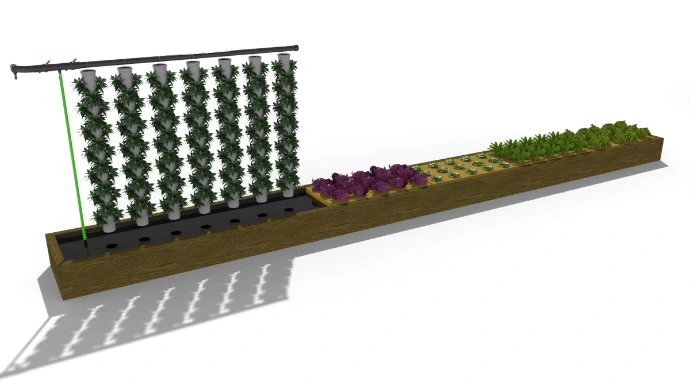
DEEP WATER CULTURE (DWC)
Best suited for:
- Leafy greens at scale: Butterhead, romaine, loose-leaf lettuces, and microgreens thrive with rapid turnarounds.
(14 plants per 1m² | 10 sq ft) - Tender culinary herbs: Basil, mint, cilantro, and chives that love constant root moisture.
- Asian brassicas & greens: Bok choy, tatsoi, Swiss chard, and watercress.
GROWTOWER
Best suited for:
- High-density leafy greens: A wide variety of lettuces, arugula, spinach, and kale.
(24 plants per tower) - Compact culinary herbs: Basil, cilantro, parsley, dill, and oregano.
- Small fruiting crops: Strawberries perform exceptionally well, hanging cleanly without touching soil or damp media.
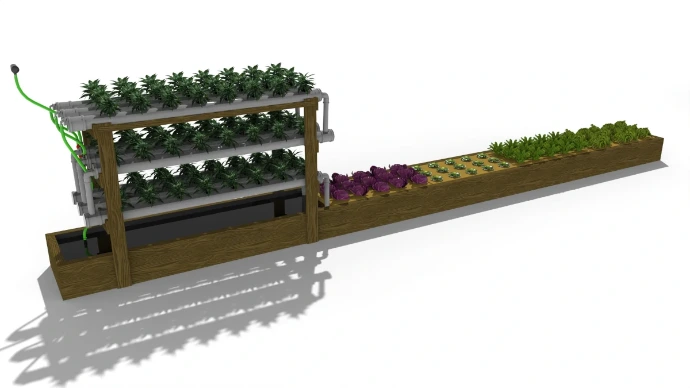
NFT (Nutrient Film Technique)
Best suited for:
- Fast-turnaround leafy greens: Gourmet lettuces, salad mixes, arugula, spinach, and watercress.
(48 plants per 1m² | 10 sq ft) - Specialty culinary herbs: Basil, mint, chives, coriander, and dill that benefit from quick harvest cycles.
- Shallow-root, lightweight crops: Plants that don't develop heavy, woody root balls or require physical soil support.
Enclosure
Depending on your local climate and the fish species you choose to raise, several housing options are available. In addition, you will need a suitable processing room for harvesting and preparing your fish. If desired, this facility can be directly connected to the system.
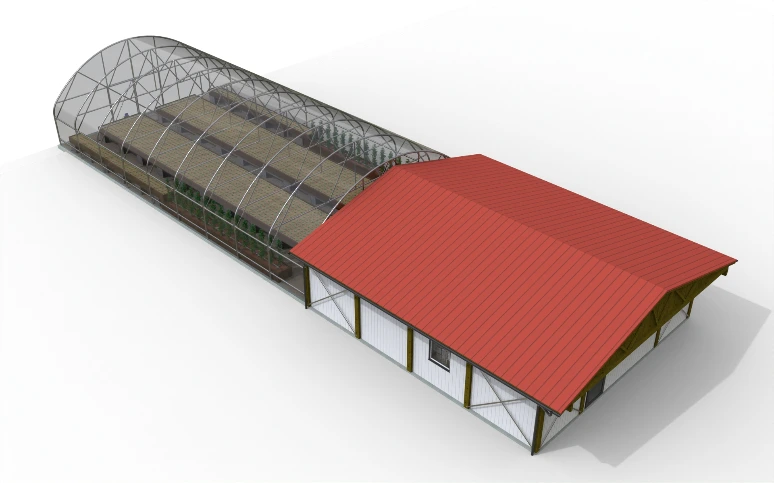
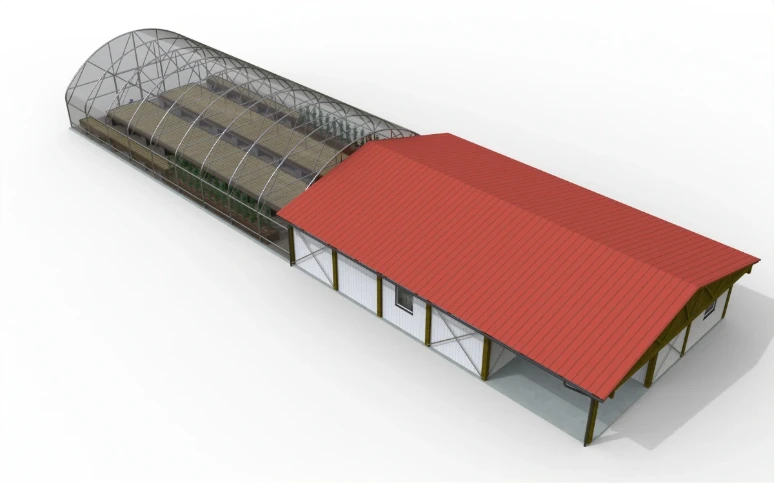
Insulated Building
Ideal for raising warm water fish in cold climate.
The picture shows:
- Building for aquaculture and hydroponics bed in greenhouse
Insulated Building
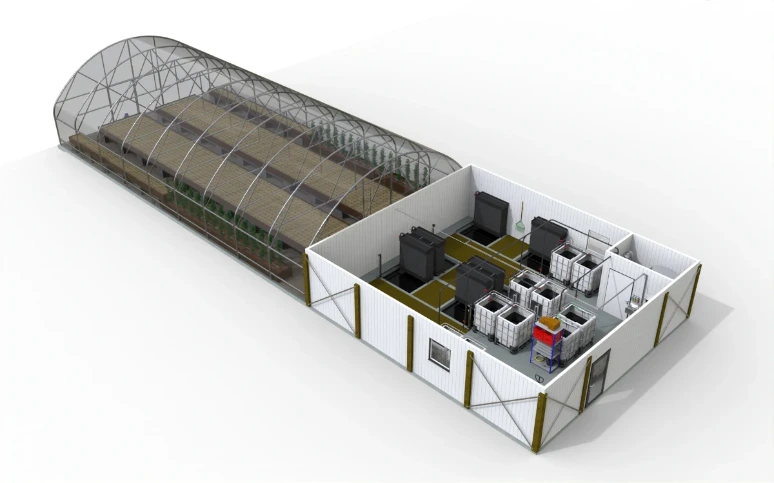
Ideal for raising warm water fish in cold climate.
The picture shows:
- CONCRETE aquaculture in building and hydroponics bed in greenhouse
- Roof is hidden
Insulated Building
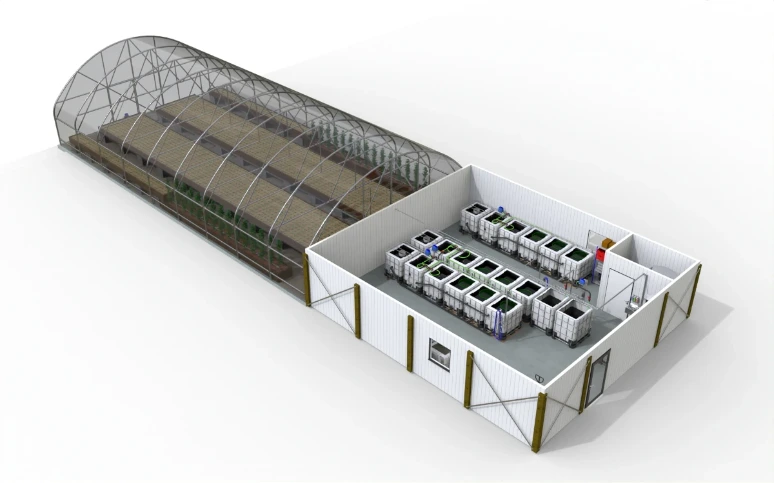
Ideal for raising warm water fish in cold climate.
The picture shows:
- IBC aquaculture in building and hydroponics bed in greenhouse
- Roof is hidden
Insulated Building
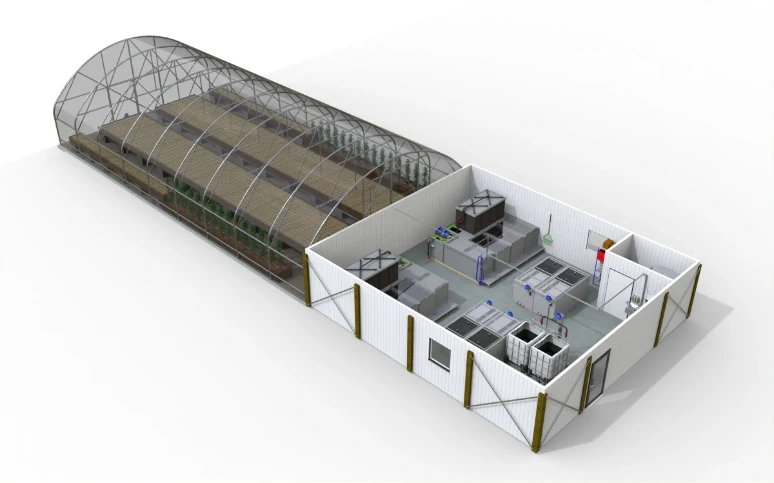
Ideal for raising warm water fish in cold climate.
The picture shows:
- MODULAR aquaculture in building and hydroponics bed in greenhouse
- Roof is hidden
Insulated Building
Ideal for raising warm water fish in cold climate.
The picture shows:
- Building for aquaculture and hydroponics bed in greenhouse
- Processing room integrated in building
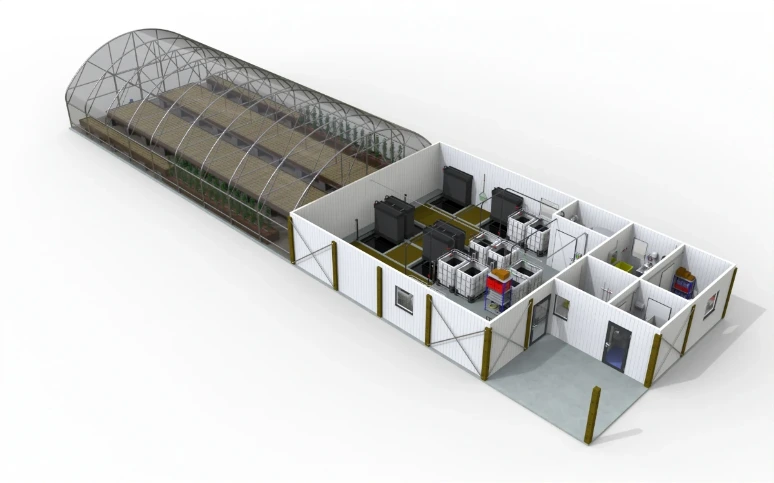
Insulated Building
Ideal for raising warm water fish in cold climate.
The picture shows:
- CONCRETE aquaculture in building and hydroponics bed in greenhouse
- Processing room integrated in building
- Roof is hidden
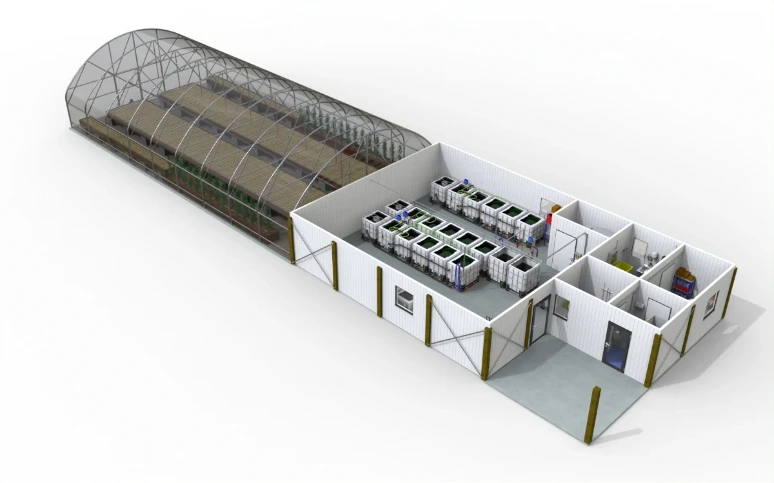
Insulated Building
Ideal for raising warm water fish in cold climate.
The picture shows:
- IBC aquaculture in building and hydroponics bed in greenhouse
- Processing room integrated in building
- Roof is hidden
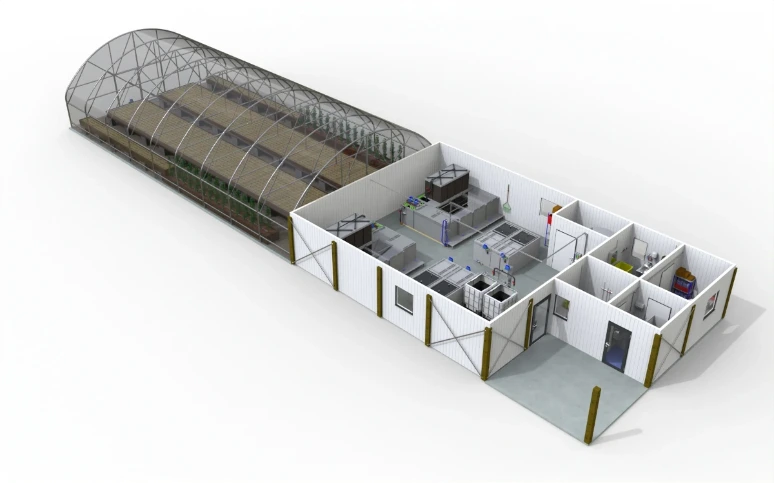
Insulated Building
Ideal for raising warm water fish in cold climate.
The picture shows:
- MODULAR aquaculture in building and hydroponics bed in greenhouse
- Processing room integrated in building
- Roof is hidden
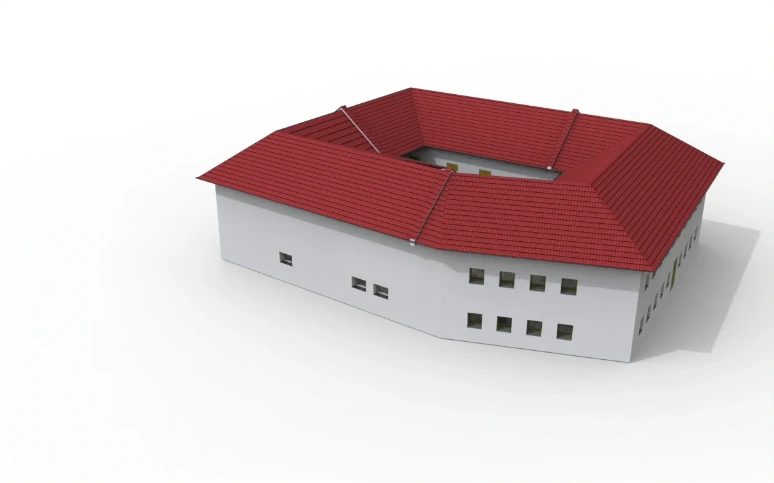
Existing Building
Reuse existing structures for raising warm water fish.
The picture shows:
- Farmhouse with unused stable or storage rooms
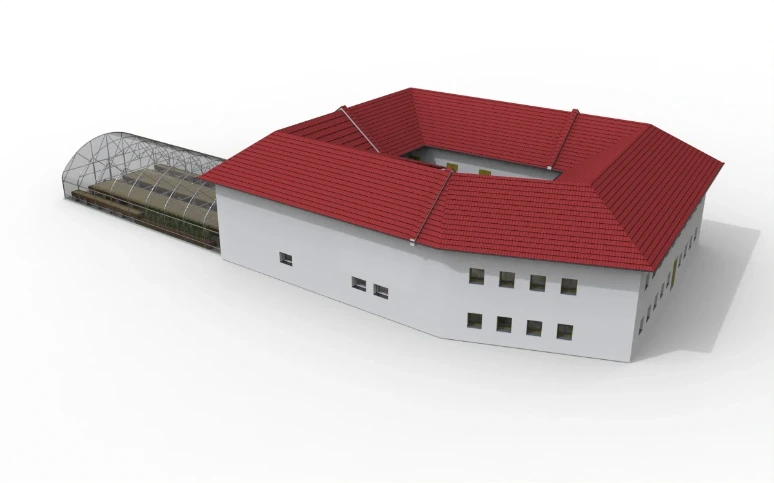
Existing Building
Reuse existing structures for raising warm water fish.
The picture shows:
- Farmhouse with unused stable or storage rooms
- Greenhouse with hydroponics beds
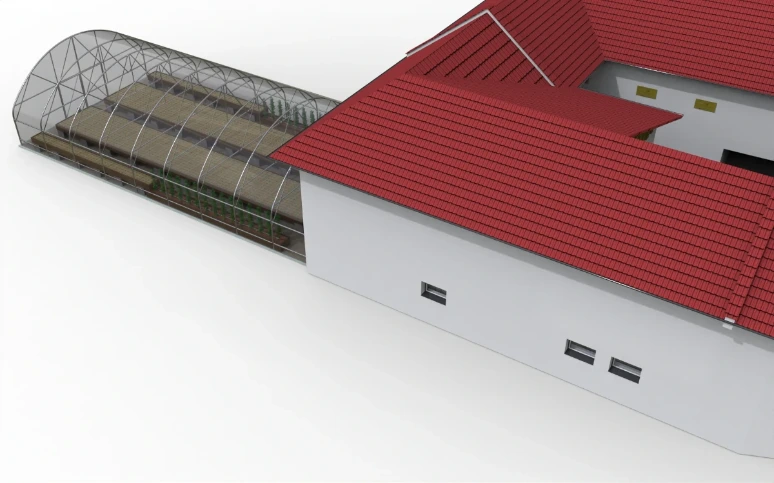
Existing Building
Reuse existing structures for raising warm water fish.
The picture shows:
- Building for aquaculture and hydroponics bed in greenhouse
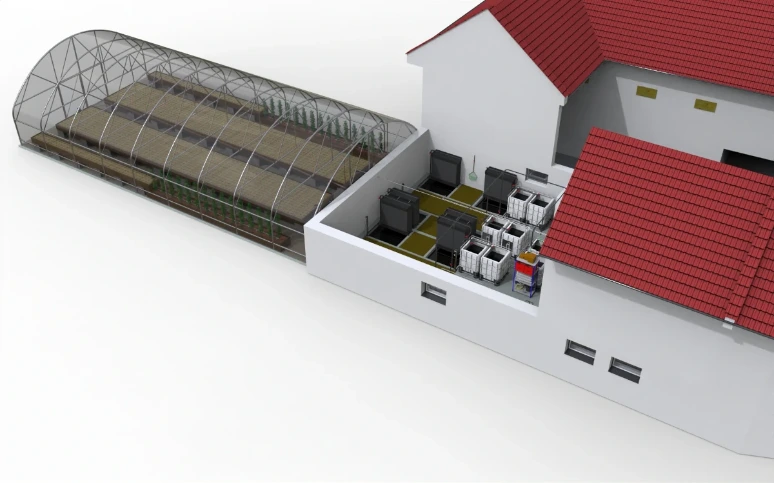
Existing Building
Reuse existing structures for raising warm water fish.
The picture shows:
- CONCRETE aquaculture in building and hydroponics bed in greenhouse
- Part of the building is hidden
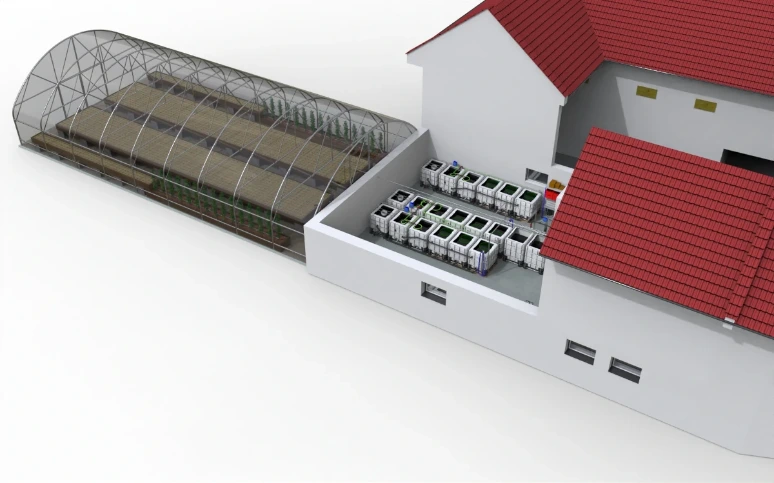
Existing Building
Reuse existing structures for raising warm water fish.
The picture shows:
- IBC aquaculture in building and hydroponics bed in greenhouse
- Part of the building is hidden
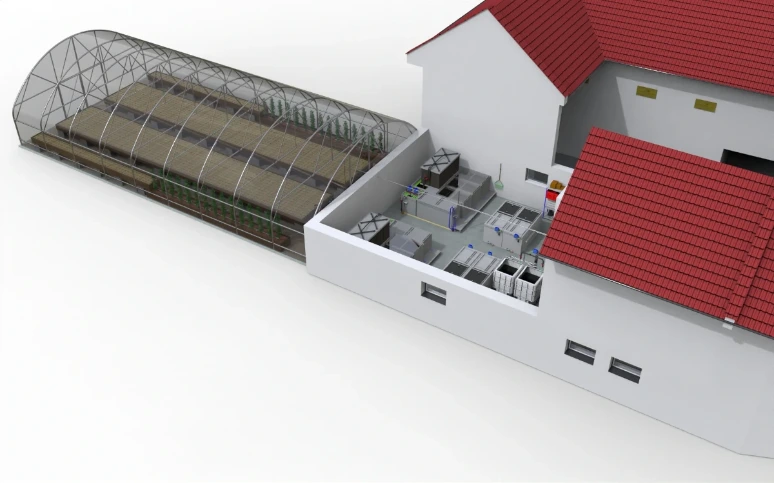
Existing Building
Reuse existing structures for raising warm water fish.
The picture shows:
- MODULAR aquaculture in building and hydroponics bed in greenhouse
- Part of the building is hidden
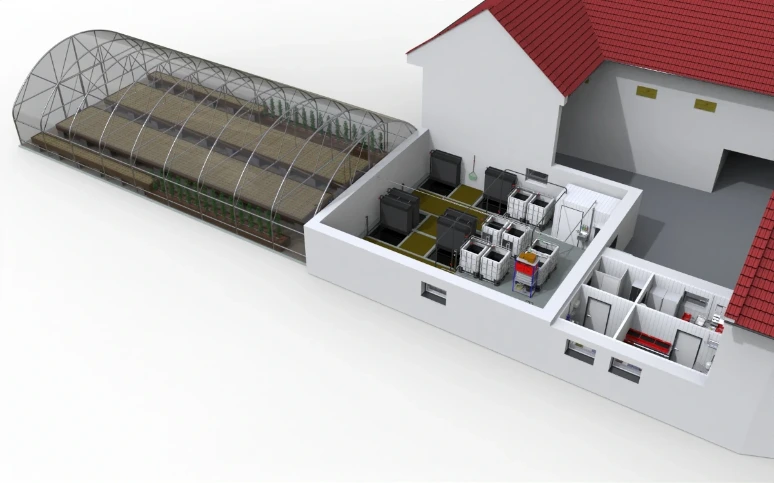
Existing Building
Reuse existing structures for raising warm water fish.
The picture shows:
- CONCRETE aquaculture in building and hydroponics bed in greenhouse
- Processing room integrated in building
- Part of the building is hidden
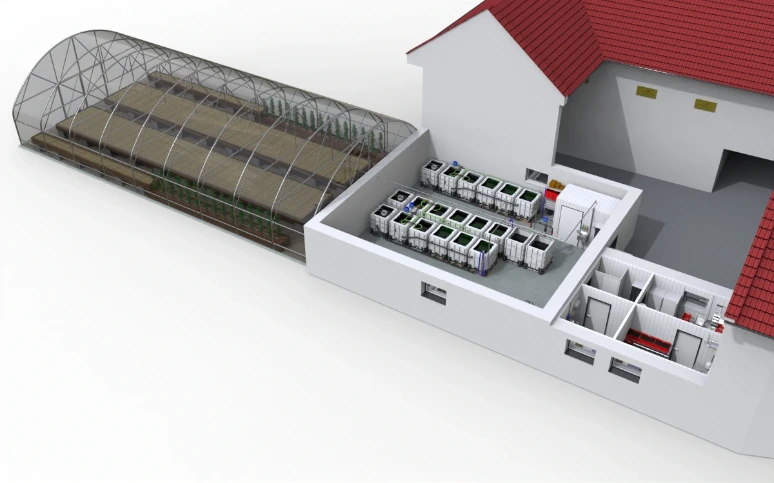
Existing Building
Reuse existing structures for raising warm water fish.
The picture shows:
- IBC aquaculture in building and hydroponics bed in greenhouse
- Processing room integrated in building
- Part of the building is hidden
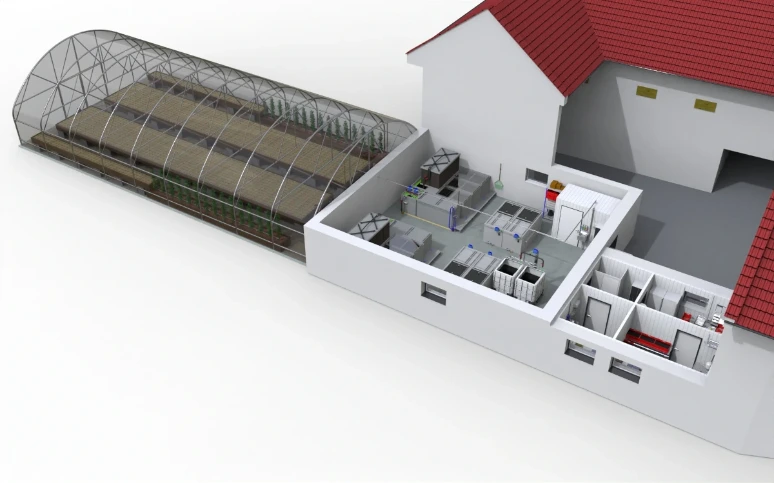
Existing Building
Reuse existing structures for raising warm water fish.
The picture shows:
- MODULAR aquaculture in building and hydroponics bed in greenhouse
- Processing room integrated in building
- Part of the building is hidden
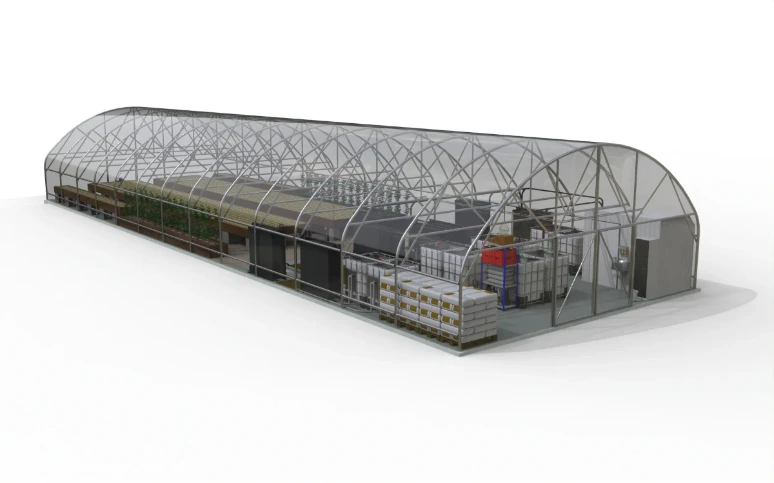
Greenhouse
Ideal for aquaponics system in moderate climate.
The picture shows:
- CONCRETE aquaculture and hydroponics bed in greenhouse
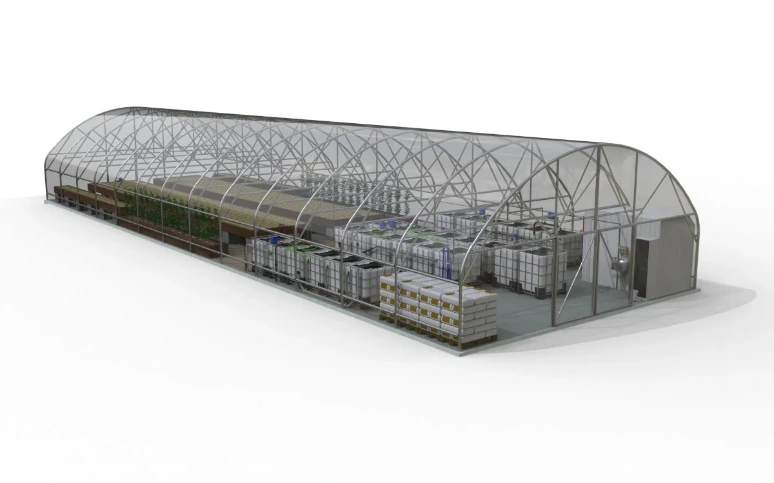
Greenhouse
Ideal for aquaponics system in moderate climate.
The picture shows:
- IBC aquaculture and hydroponics bed in greenhouse
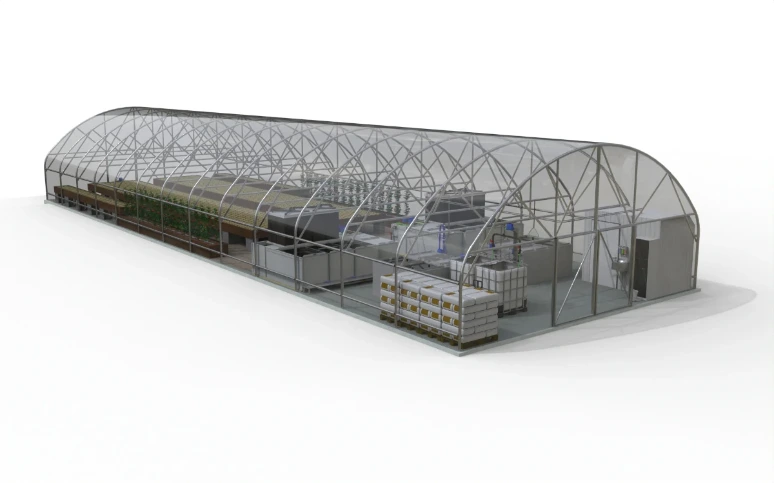
Greenhouse
Ideal for aquaponics system in moderate climate.
The picture shows:
- MODULAR aquaculture and hydroponics bed in greenhouse
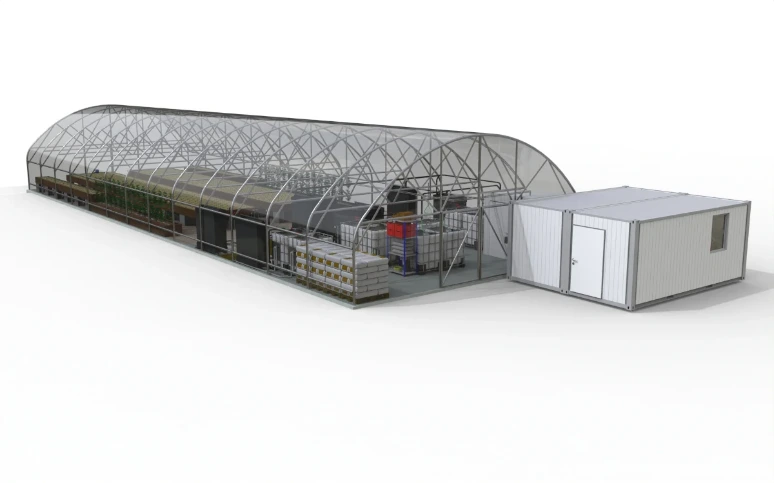
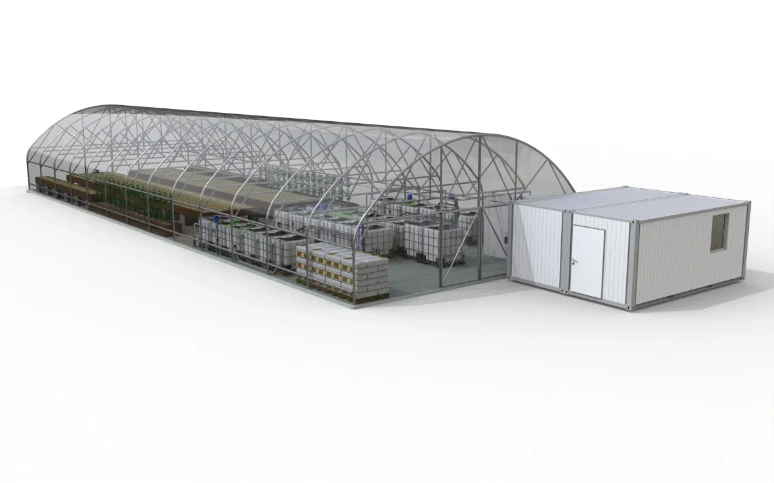
Greenhouse
Ideal for aquaponics system in moderate climate.
The picture shows:
- CONCRETE aquaculture and hydroponics bed in greenhouse
- Processing room housed in containers
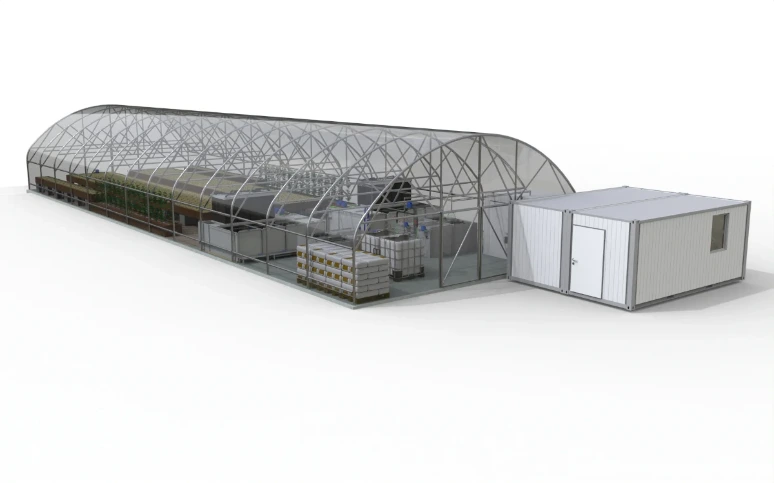
Greenhouse
Ideal for aquaponics system in moderate climate.
The picture shows:
- IBC aquaculture and hydroponics bed in greenhouse
- Processing room housed in containers
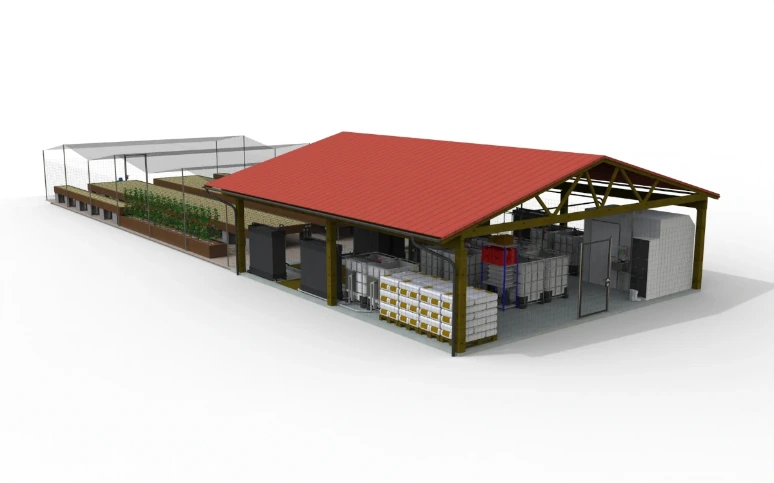
Greenhouse
Ideal for aquaponics system in moderate climate.
The picture shows:
- MODULAR aquaculture and hydroponics bed in greenhouse
- Processing room housed in containers
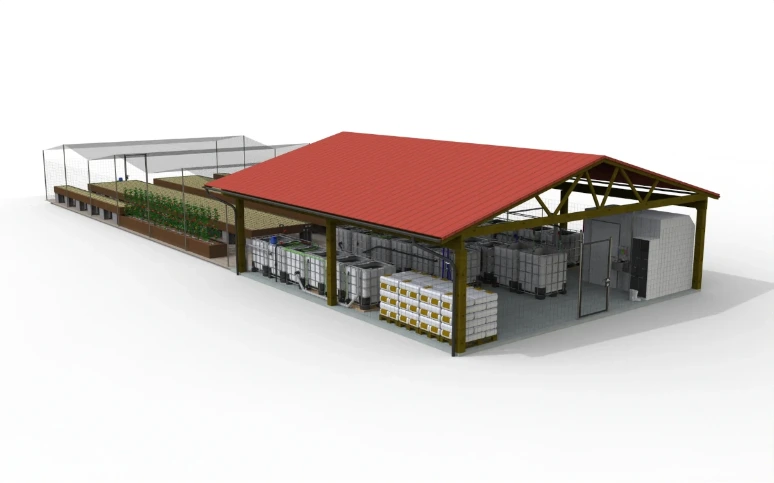
Shading
Ideal for aquaponics system in hot climate.
The picture shows:
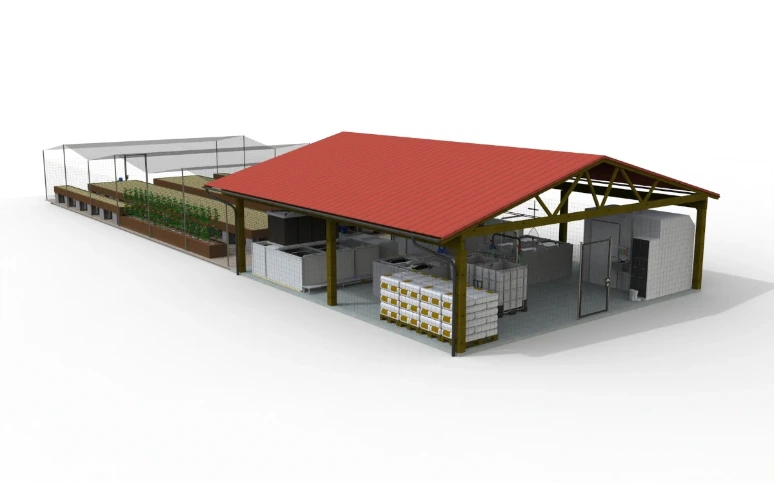
- CONCRETE aquaculture and hydroponics bed under roof and shading net
Shading
Ideal for aquaponics system in hot climate.
The picture shows:
- IBC aquaculture and hydroponics bed under roof and shading net
Shading
Ideal for aquaponics system in hot climate.
The picture shows:
- MODULAR aquaculture and hydroponics bed under roof and shading net
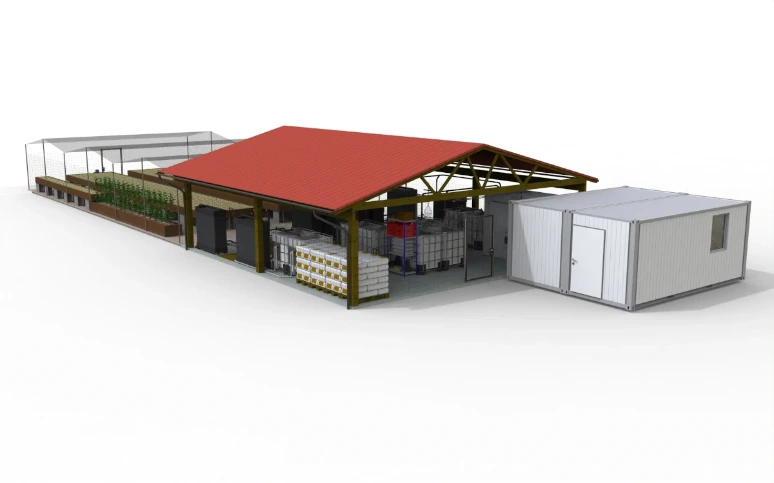
Shading
Ideal for aquaponics system in hot climate.
The picture shows:
- CONCRETE aquaculture and hydroponics bed under roof and shading net
- Processing room housed in containers
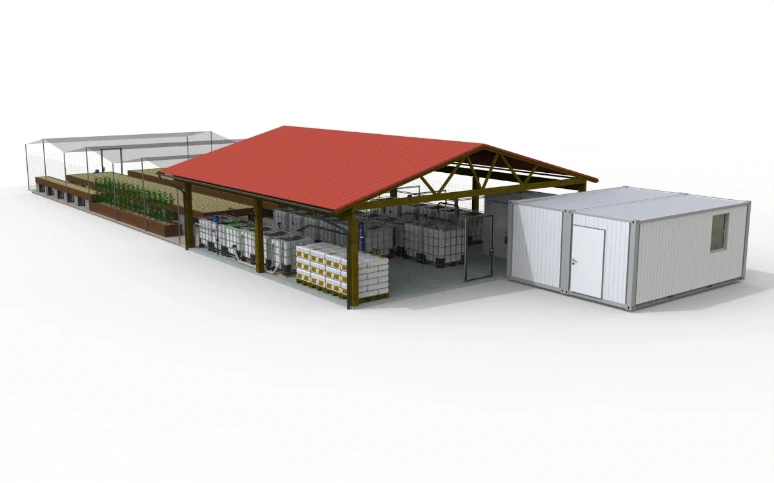
Shading
Ideal for aquaponics system in hot climate.
The picture shows:
- IBC aquaculture and hydroponics bed under roof and shading net
- Processing room housed in containers
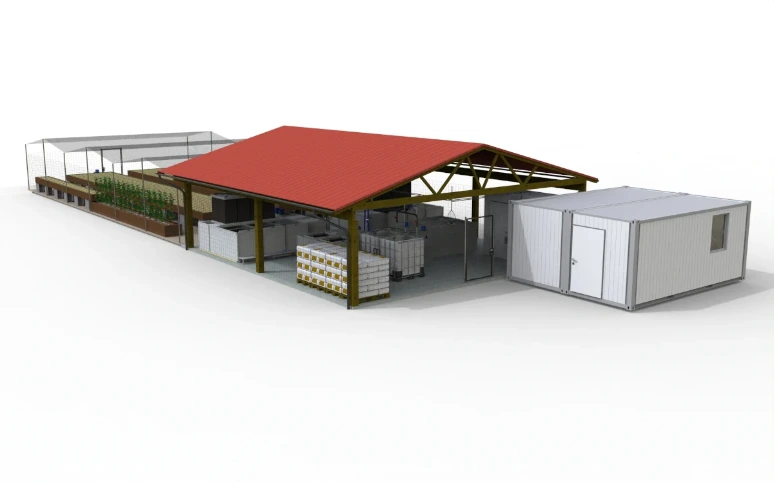
Shading
Ideal for aquaponics system in hot climate.
The picture shows:
- MODULAR aquaculture and hydroponics bed under roof and shading net
- Processing room housed in containers