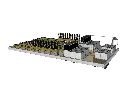
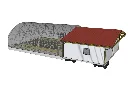
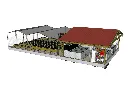
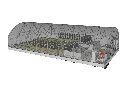
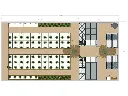
Space Requirement:
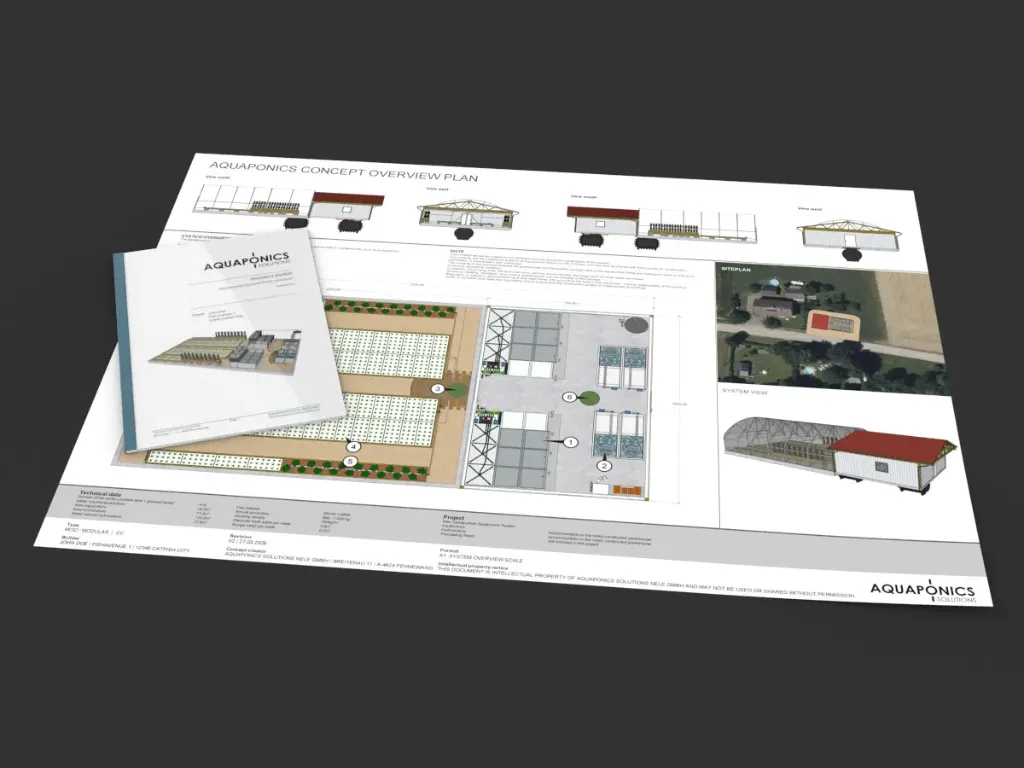
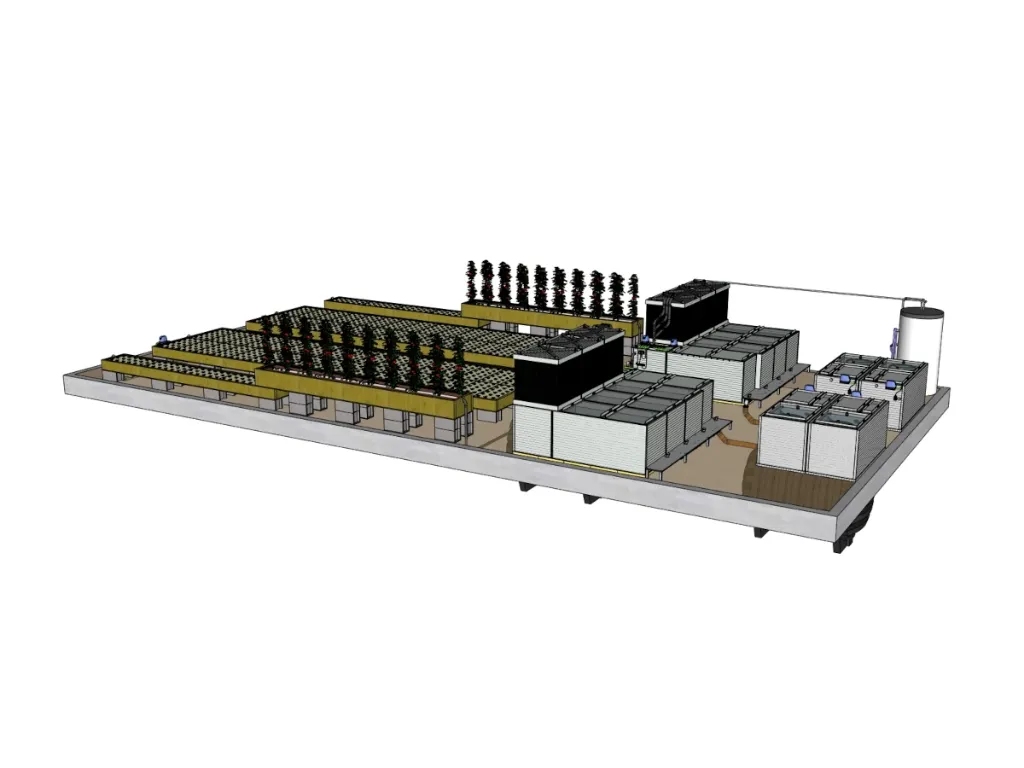
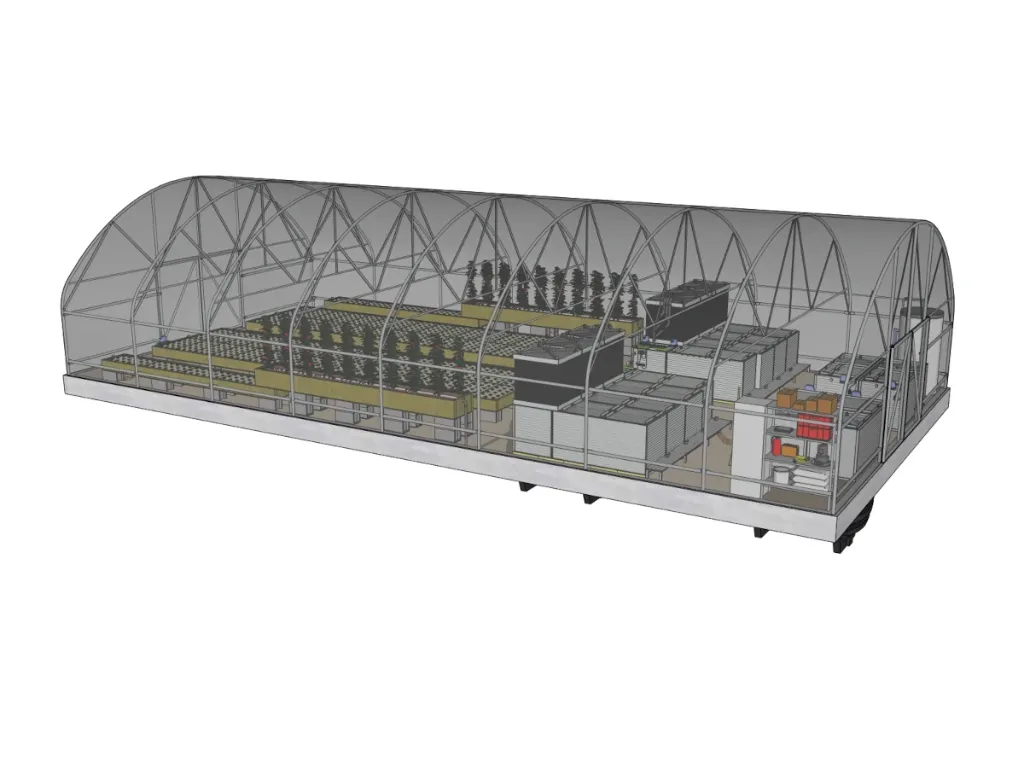
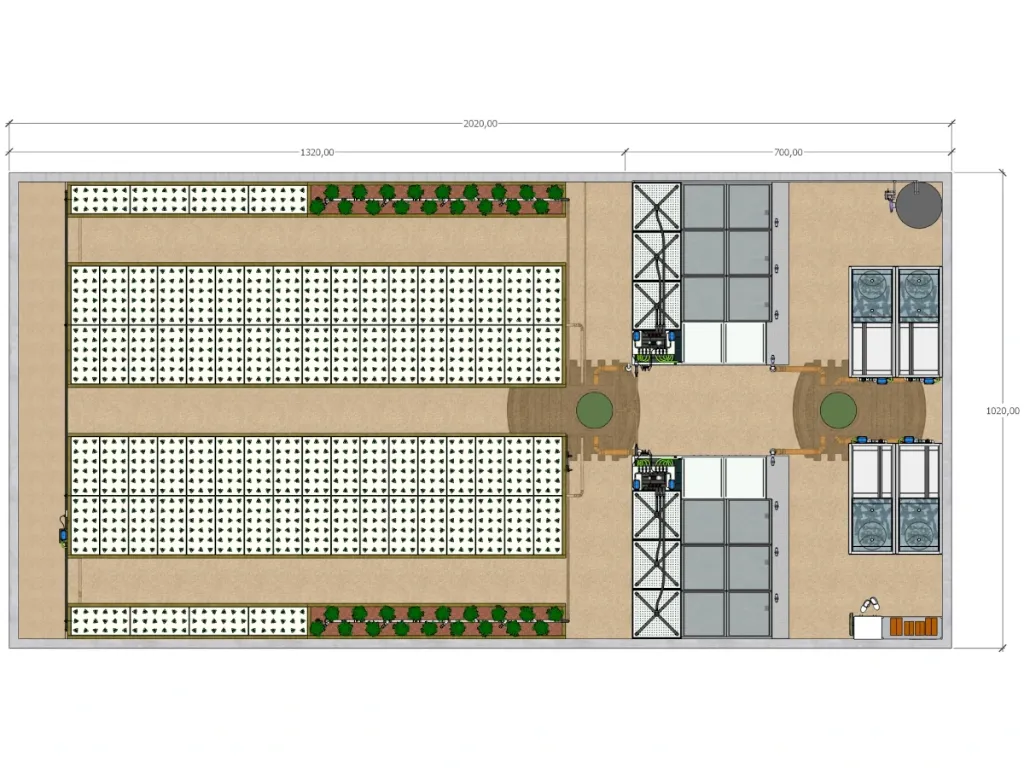
Aquaculture section: 7,0 m x 10,2 m
Hydroculture section: 13,2 m x 10,2 m
Total area: 20,2 m x 10,2 m
Hydroculture section: 13,2 m x 10,2 m
Total area: 20,2 m x 10,2 m
The length of the hydroculture gives you an annual production capacity of 18,340 salads (12 month production). It can be adjust to optimize production or space requirements.
Production Capacity Fish:
The aquaculture of the system consists of optimized modules which include the filter tanks and
6 growout tanks (total 19,6 m³ water) and
4 juvenile tanks (total 6,5 m³ water)
6 growout tanks (total 19,6 m³ water) and
4 juvenile tanks (total 6,5 m³ water)
Depending on the fish you want to produce, the maximum production capacity varies considerably:
- African Catfish (280 kg/m³ density): 11,0 to p.a.
- Tilapia (100 kg/m³ density): 2,8 to p.a.
Construction Method:
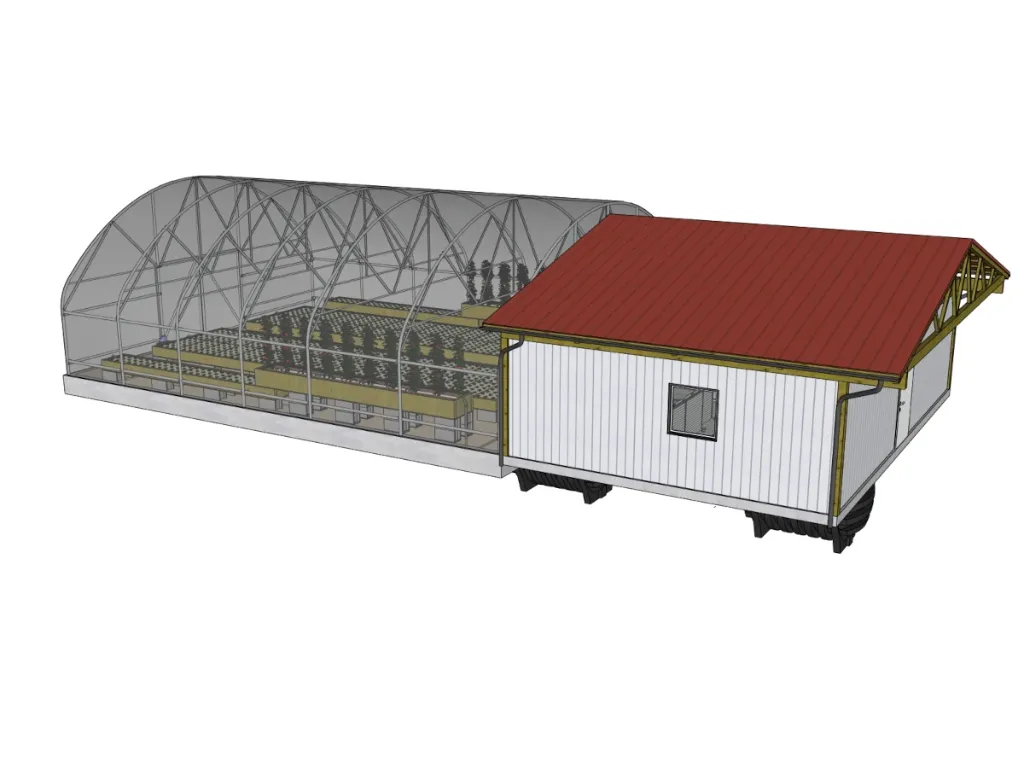
The filter system, the growout and the juvenile tanks are made of polypropylene. The coupling tank is an underground tank. The greenhouse is typically made of a steel structure with insulated foil. As an alternative glass greenhouse can be used.
The floor of the hydroculture section can be made of concrete or less solid materials like gravel or laying plates. The hydroponic grow beds are usually made of wood and fitted with liner bags.
Material Costs:
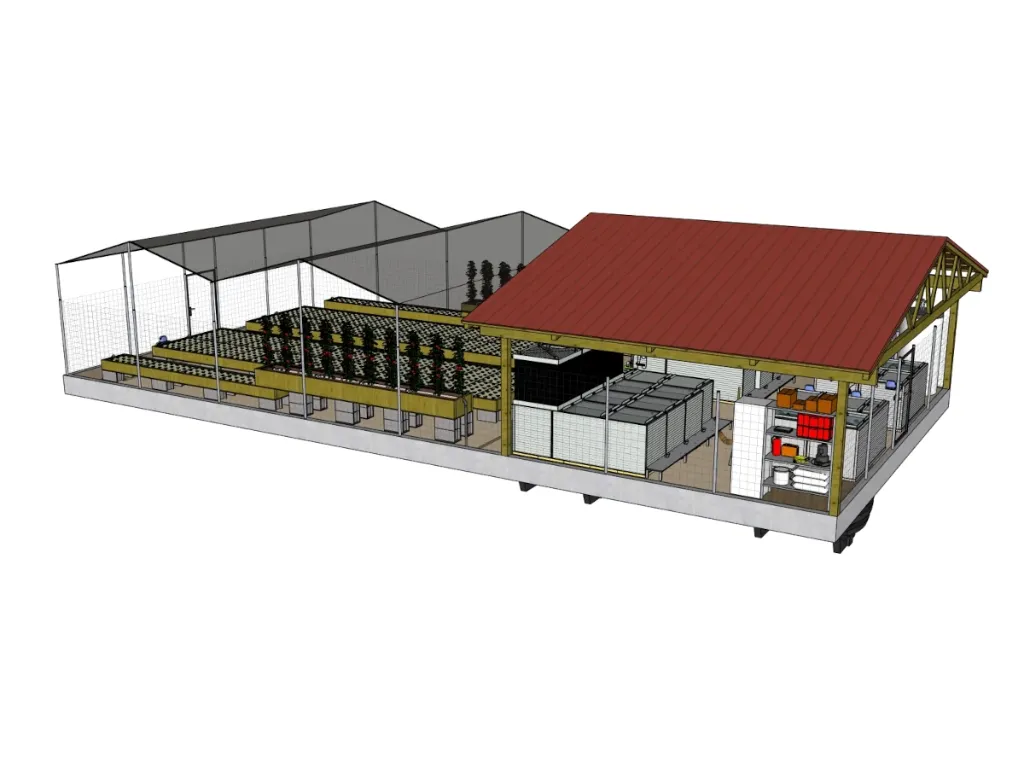
The material costs to build this system can be estimated between 85,000 and 200,000 Euros based on the climate zone. In hot regions just a shading and a roof for the aquaculture is needed. In moderate climate the whole system is placed in a greenhouse. For cold regions, an insulated building for the aquaculture and a greenhouse for the hydroculture is recommended.
Climate / Temperature Conditions:
The system is designed for the usage in different housings and can so be operated in different climates.
The system consists of insulated modules that are coupled with each other and the hydroculture beds. Each module can also be operated alone. For colder regions a heating is needed.
The system consists of insulated modules that are coupled with each other and the hydroculture beds. Each module can also be operated alone. For colder regions a heating is needed.
Annual system input/output:
Fingerlings: 5.792 pcs.
Fish feed: 11.000 kg (for African Catfish)
Freshwater: 404m³
Electricity: 7,9 MWh
Sludge water: 339 m³
Additives: Small amounts for PH management
Fish feed: 11.000 kg (for African Catfish)
Freshwater: 404m³
Electricity: 7,9 MWh
Sludge water: 339 m³
Additives: Small amounts for PH management