Space Requirement:
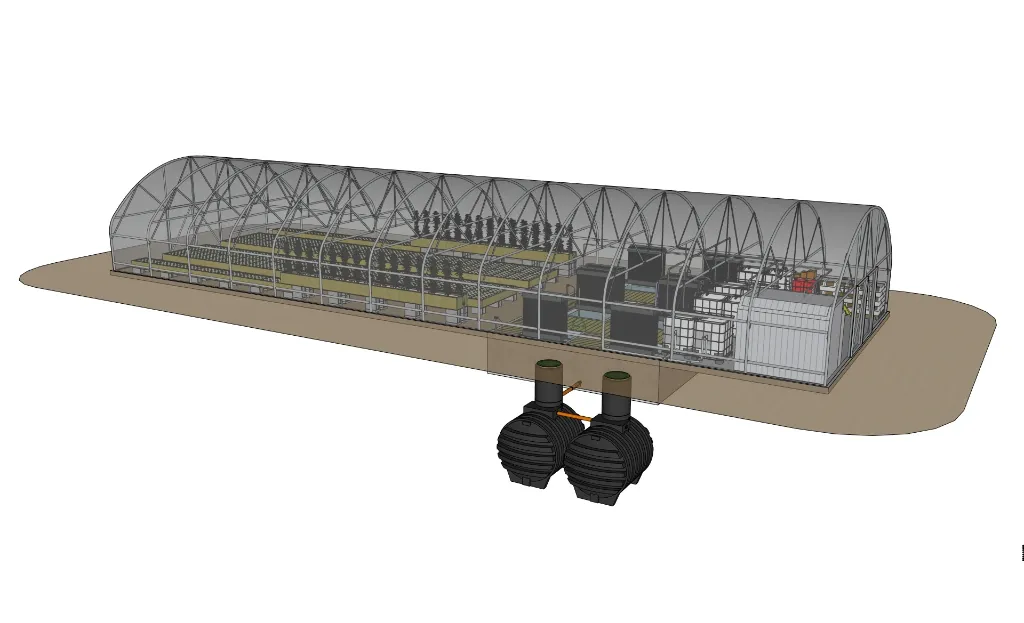
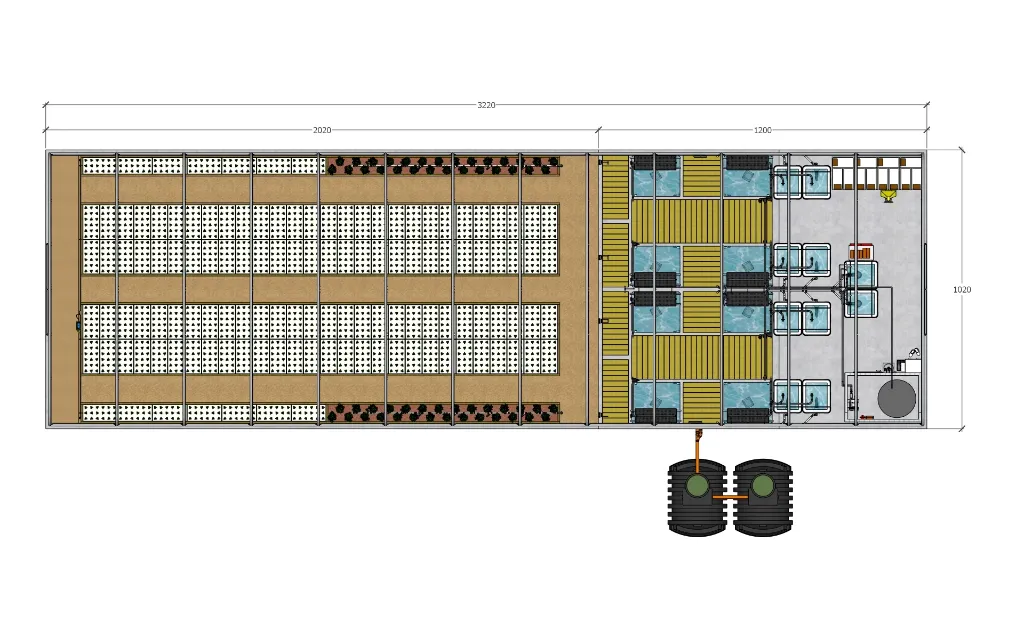
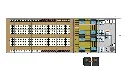
Aquaculture section: 12,0 m x 10,2 m
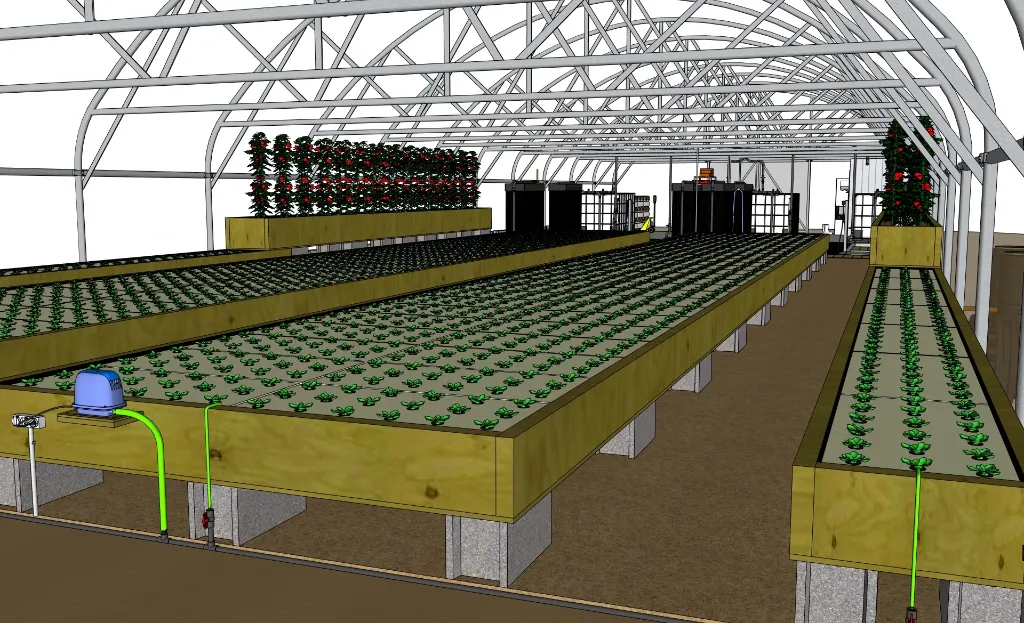
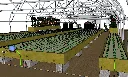
Hydroculture section: 20,2 m x 10,2 m
Total area: 32,2 m x 10,2 m
The length of the hydroculture gives you an annual production capacity of 25,100 salads
(10 month production) and can be adjust to optimize production or space requirements.
(10 month production) and can be adjust to optimize production or space requirements.
Production Capacity Fish:
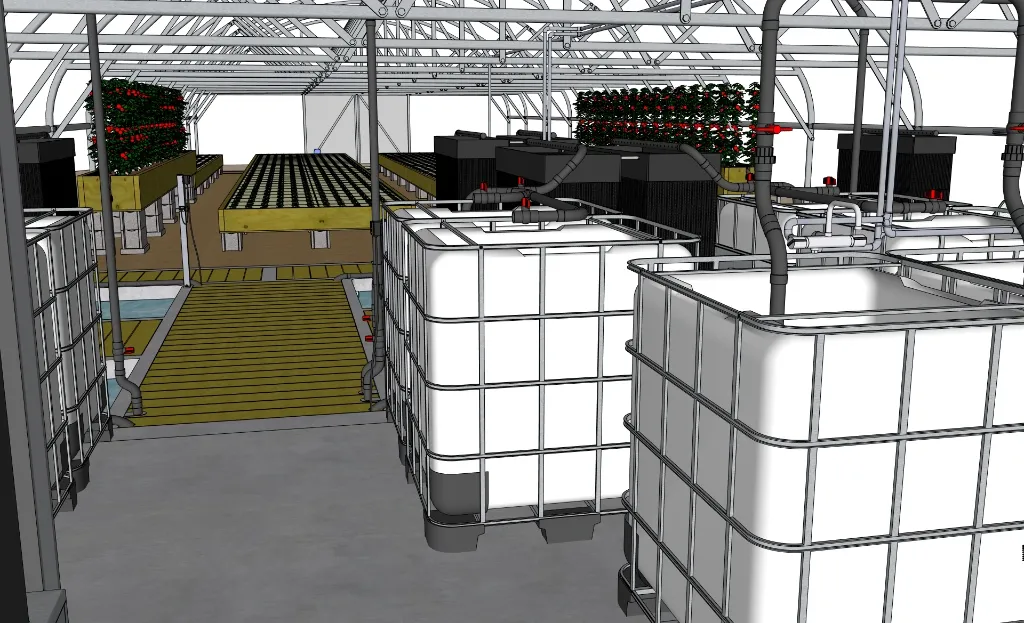
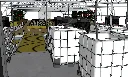
The aquaculture section of the system consists of optimized filter tanks,
8 growout tanks (total 23,3 m³ water) and
8 juvenile tanks (total 7,6 m³ water)
Depending on the fish you want to produce, the maximum production capacity varies considerably:
- African Catfish (280 kg/m³ density): 26,5 to p.a.
- Tilapia (100 kg/m³ density): 6,7 to p.a.
Construction Method:
The filter system and the growout tanks are made of concrete and typically are sunk into the ground. The juvenile tanks are build of light material. The greenhouse is typically made of a steel structure with isolated foil. As an alternative glass greenhouse can be used.
The floor of the hydroculture section can be made of concrete or less solid materials like gravel or laying plates. The hydroponic grow beds are usually made of wood and fitted with liner bags.
Material Costs:
The material costs to build this system can be estimated between 200,000 and 250,000 Euros based on prices achievable in middle Europe.
As many customers build the system themselves, labor is not included in this cost estimation.
Climate / Temperature Conditions:
The system is designed for the usage in areas with moderate tempered climate and for customers in cold areas with cheap heating capacity such as biogas plant operators.
The whole system is located inside a greenhouse with nominal width of 10 m. The heating is not part of the construction plan.
Annual system input/output:
Fingerlings: 13.984 pcs.
Fish feed: 23.977 kg (for African Catfish)
Freshwater: 702 m³
Electricity: 27,4 MWh (excl. heating)
Sludge water: 595 m³
Additives: Small amounts for PH management
Fish feed: 23.977 kg (for African Catfish)
Freshwater: 702 m³
Electricity: 27,4 MWh (excl. heating)
Sludge water: 595 m³
Additives: Small amounts for PH management